The most overlooked parts of a fishing setup are often items nobody expects to use: a charged phone, a first-aid kit or a landing tool that works under pressure. An unchecked detail can turn a short outing into a preventable problem. A careful audit removes dead weight, keeps safety equipment accessible and supports decisions that respect fish, access rules and changing conditions. For Northwest Indiana bass fishing, preparation should be measured by control and judgment, not tackle-bag size.
Start with the conditions, not the tackle box
Before choosing lures, check water access, the forecast, wind direction, daylight and likely shoreline or boat traffic. A compact bank-fishing load may suit a familiar pond but not a longer trip on a larger body of water. Match the kit to the route and exit plan.
Ask three practical questions:
– How far will I be from the vehicle or a safe exit?
– What weather change would make me leave early?
– Can I reach every safety item without digging through loose gear?
Protect your phone from spray and keep it accessible. A power bank helps only if it is charged and its cable stays dry. On a boat, personal flotation equipment should fit the user and be worn as required by current rules and conditions, not buried under spare tackle.
Cold water, unstable footing, heat and sudden storms deserve more attention than another soft-plastic color. Dependable footwear, sun protection, drinking water and a small first-aid kit usually earn their space first.
The essential gear audit
Inspect equipment at home, not at the ramp. Check rods for damaged guides, loose reel seats and cracked handles. A line nick near the leader knot may be difficult to see but easy to feel by running the line between clean fingers. Replace questionable line instead of trusting it for one more fish.
Test reels for smooth drag movement, handle function, bail or spool operation and a clean connection between line and terminal tackle. Remove rusted hooks, weak split rings and leaders with damaging kinks. A lure can be repaired; a careless hook injury is harder to undo.
Keep cutting tools covered or secured. Needle-nose pliers, hook removers and line clippers should be reachable with one hand, especially when a fish is thrashing. In a kayak or small craft, loose tools are trip hazards and difficult to retrieve. Attach only what you can use safely.
Build a fish-care system before the first cast
Catch-and-release ethics begin before a fish is hooked. Use tackle strong enough to land fish without a prolonged fight, especially in warm conditions when exhaustion can worsen quickly. Do not turn light-line difficulty into a recovery problem simply for sport.
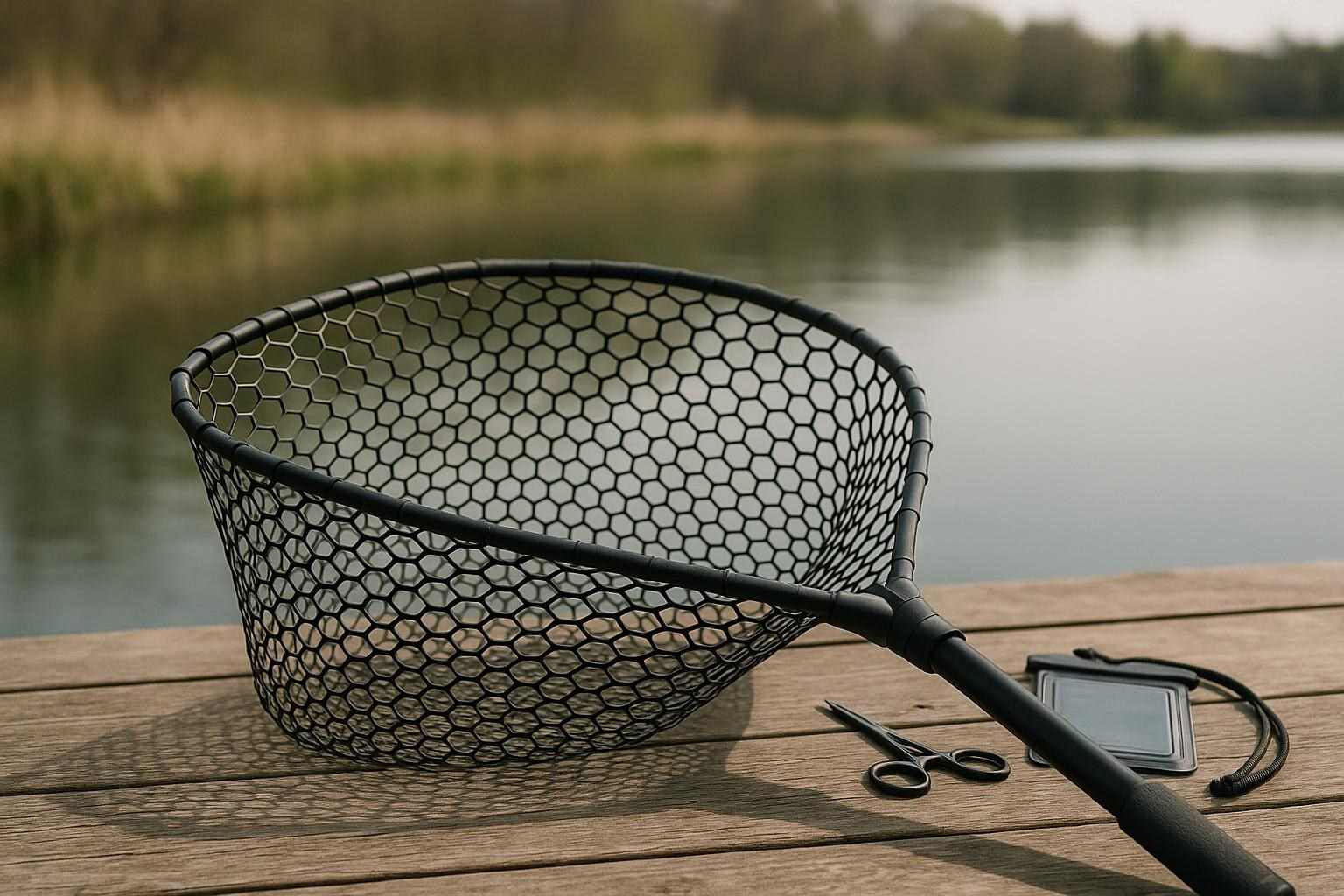
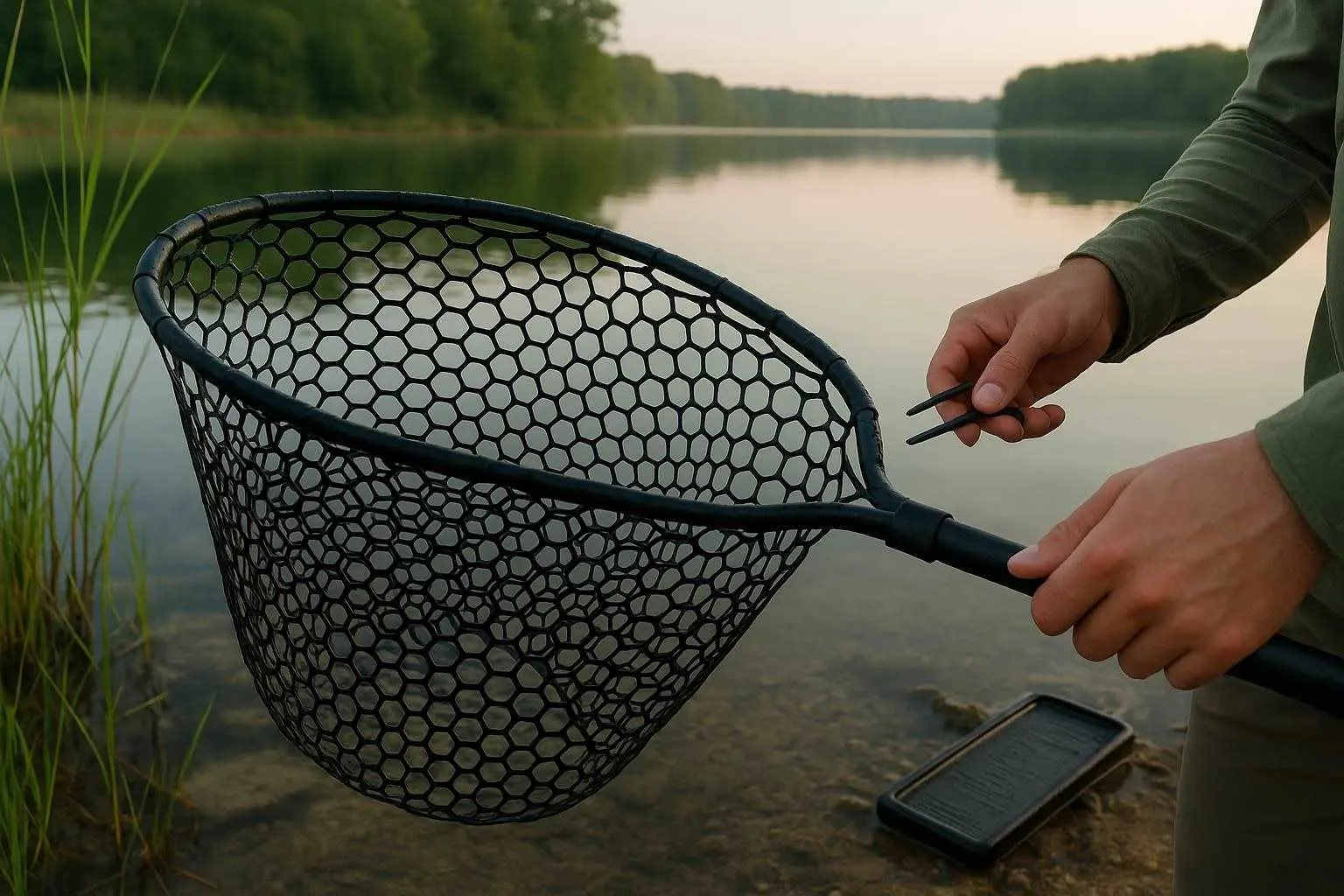
A rubberized landing net can reduce handling and help support a fish. Wet your hands before touching it, keep it close to the water and avoid squeezing its body or placing fingers in the gills. If a hook is deeply embedded and removal would cause more damage, cut the line as close to the hook as practical and follow current fisheries guidance.
Do not hold a fish out of the water while searching for a camera, changing settings or arranging a photograph. Release it promptly and in good condition; if that is not possible, skip the photo.
Forceps, a knotless or rubberized net and a measuring device can support careful handling, but no tool replaces restraint. When lifting is appropriate, keep the fish horizontal and support its weight. Return it to the water facing gentle flow only long enough to confirm it can swim away. Avoid unnecessary revival in turbulent water or near hazards.
Keep conservation gear from becoming litter
Line, bait packaging, broken hooks and torn plastics are not harmless leftovers. Store waste in a sealed pouch rather than a cup holder or open pocket. Before leaving, inspect the shoreline around your position, including beneath a chair, cooler or tackle bag.
Keep soft plastics out of the water and away from wildlife. Do not discard unused bait or household material at an access point. Clean mud, plant fragments and standing water from equipment before visiting another waterbody, following current invasive-species guidance for cleaning and drying.
A conservation-minded load can stay small: a waste pouch, safe hook-removal tool, basic first-aid supplies, reusable water container and a towel or cloth for equipment. These items do more for the resource and angler than a crowded box of duplicate lures.
Verify rules before you travel
Indiana fishing regulations can change, and rules for one waterbody may not apply to another. Before leaving, confirm current license requirements, seasons, size or possession limits, approved methods, access restrictions and special regulations. Use official Indiana guidance rather than an old screenshot, memory or a friend's summary.
Check details involving hooks, bait, transport, live wells, boating equipment and specific waters. If fishing from private property, verify permission separately; a visible shoreline is not an invitation.
Keep digital information as a backup. A weak signal, wet phone or drained battery can make paper notes useful, particularly when traveling between access points. The angler remains responsible for checking current requirements because this guidance can change.
The lighter-load checklist
Use this short checklist before departure:
– Forecast, wind, daylight and water access checked.
– Phone protected, charged and reachable; backup power packed if needed.
– Flotation equipment and other required safety gear present and usable.
– Rods, reels, line, knots, hooks and landing tools inspected.
– Pliers, cutters and first-aid supplies secured for quick access.
– Water, sun protection, suitable footwear and weather layers packed.
– Fish-care tools ready; no plan depends on prolonged handling.
– Waste pouch included; line, plastics and bait will leave with you.
– Current Indiana regulations, license needs and site restrictions verified.
The final decision is often subtraction. Remove gear you cannot explain, duplicate lure colors and anything that fails inspection. Keep what helps you travel safely, release fish responsibly and leave the access point cleaner than you found it.
Leave a Reply